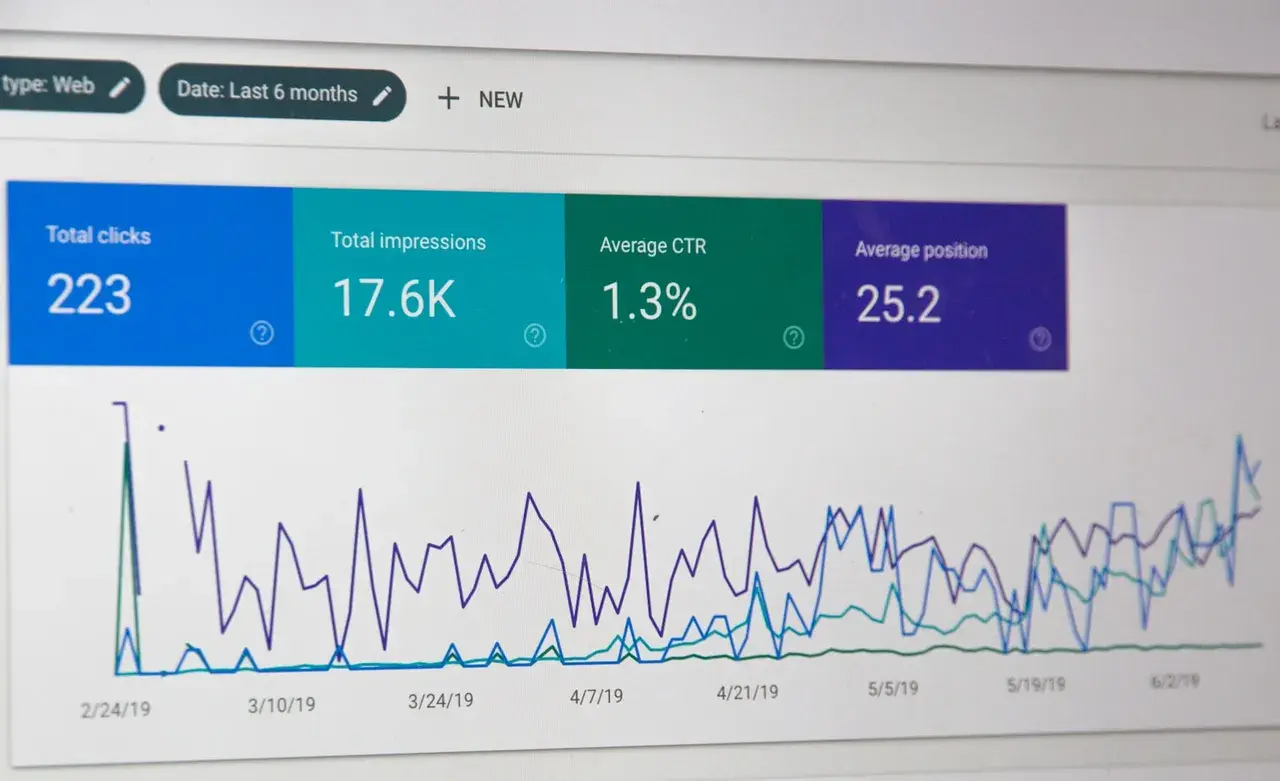
This guide shows you how to use SEO to bring travelers who are ready to book to your travel agency.
Why travel agents need SEO (and why most are missing out)
Say someone searches "travel agent for Japan" on Google. That person is ready to plan a trip and wants expert help they're willing to pay for.
Where does your travel agency show up in those search results? If you're like most travel agents, you're probably not on the first page, and you may not show up at all. That's a problem, because 87% of travelers use search engines to plan their trips.
The good news is that most travel agents don't do SEO well, so there's plenty of room for you to stand out.
What SEO is and why it suits travel agents
SEO stands for Search Engine Optimization. It's how you help your ideal clients find you when they search online.
Someone who types "travel agent near me" into Google has a trip to plan and wants your expertise to plan it. That's a high-intent lead, the best kind you can get.
High-intent traffic
A person who searches "Viking river cruise travel agent" is probably ready to book and wants professional help. If your website shows up for that search, you reach someone who has already decided to work with a travel agent.
On social media, people might see your post while scrolling. With SEO, they find you because they were looking for what you offer.
E-E-A-T: why Google values your travel expertise
Google uses a standard called E-E-A-T to judge websites:
- Experience: Have you actually traveled to the places you recommend?
- Expertise: Do you know what you're talking about?
- Authoritativeness: Do other websites link to yours?
- Trustworthiness: Can people trust your advice?
Travel agents start with an advantage here. You've been to the destinations, you know how to plan trips, and you help real people. You just need to show that on your website.
How to do keyword research
Keywords are what people type into Google. Before you write any content, find out what your ideal clients are searching for.
Start with Google Autocomplete (free)
Type "travel agent" into Google and see what it suggests:
- Travel agent near me
- Travel agent for Japan
- Travel agent cruise specialist
- Do travel agents still exist?
Those suggestions come from searches real people are making.
Use Google Keyword Planner
If you have a Google Ads account (free to set up), you can use Google Keyword Planner. It shows you:
- How many people search for each keyword
- How hard it might be to rank
- Related keywords you might not have thought of
Focus on long-tail keywords first
Ranking for "travel agent" on its own is very hard. Start with longer, more specific phrases like these:
- "Best travel agent for Italy honeymoon"
- "River cruise travel agent Ohio"
- "Group travel agent for seniors"
They're easier to rank for and often convert better.
Building an SEO-friendly website structure
Your site structure works like a roadmap for Google. Make it easy for search engines to see what you do and who you help.
The three-level rule
Keep every page within three clicks of your homepage:
- Homepage → Services → Specific Service
- Homepage → Destinations → Specific Destination
Good structure:
- yourtravelagency.com (homepage)
- yourtravelagency.com/cruises (service page)
- yourtravelagency.com/cruises/river-cruises (specific service)
Bad structure:
- yourtravelagency.com/services/cruises/river-cruises/europe/danube
Create pillar pages
Think of your website as a tree. The homepage is the trunk, your main service pages are the big branches, and everything else grows from those.
Main pillar pages might include:
- Cruises
- Group travel
- Luxury travel
- Destination planning
Each pillar page can have sub-pages that go deeper into specific topics.
On-page SEO: making each page rank
Every page on your website should be optimized for search engines. Start with these elements.
Title tags and meta descriptions
Your title tag works like a book title: it tells Google what the page is about. The meta description is the back cover, the part that convinces people to click.
- Good title: "Japan Travel Agents | Custom Itineraries & Expert Guidance"
- Good meta description: "Plan your perfect Japan trip with our expert travel agents. From Tokyo to Kyoto, we craft custom itineraries for stress-free travel. Start planning today!"
Header tags (H1, H2, H3)
Use headers to organize your content:
- H1: Your main headline (only one per page)
- H2: Major sections
- H3: Subsections
For example:
- H1: Expert Japan Travel Agents
- H2: Why Choose Our Japan Travel Services
- H2: Popular Japan Destinations We Serve
- H3: Tokyo
- H3: Kyoto
- H3: Osaka
Internal linking
Link your pages to each other. If you're writing about Japan travel, link to your Japan destination page. If you mention cruises, link to your cruise services page.
This helps Google understand how your content connects, and it keeps visitors on your site longer.
Technical SEO: the behind-the-scenes stuff
Technical SEO might sound scary, but it's mostly about making your website fast and easy to use.
Website speed matters
Google cares about how fast your website loads. Slow websites rank lower and lose visitors. The usual culprits are:
- Large images
- Too many plugins
- Poor web hosting
Essential WordPress plugins
If you use WordPress (which we recommend), these plugins will handle most technical SEO for you:
- [RankMath](https://rankmath.com/) (free) creates XML sitemaps, optimizes meta tags, helps with schema markup, and tracks 404 errors.
- Imagify ($6/month) compresses images automatically and converts them to WebP format, which saves bandwidth and improves speed.
- WP Rocket ($49/year) speeds up your website by enabling lazy loading and minifying code, which improves your performance scores.
Choose good web hosting
Your web host is the foundation your site sits on, and a good one keeps it fast and reliable. Some solid options:
- Bluehost (user-friendly)
- SiteGround (good performance)
- WP Engine (premium but worth it)
Avoid very cheap hosting. It usually means a slow, unreliable website.
Local SEO: showing up in your area
Even if you help clients travel worldwide, you still need local SEO to capture nearby searches.
Google Business Profile is essential
Your Google Business Profile is often the first thing people see when they search for travel agents in your area. To optimize it:
- 1Get verified. This can be tricky, since Google often requires video verification now. Be ready to show your business location and signage, and have business documents on hand.
- 2Ask happy clients to leave Google reviews. Start slow, with one review per week for the first two months, then you can ask for more.
- 3Post travel tips, destination highlights, and client stories on your profile regularly.
- 4Upload photos of destinations you've visited, your office, and yourself.
Citations build trust
Citations are mentions of your business name, address, and phone number on other websites. Google reads them as votes of confidence.
Good citation sources:
- Yelp
- Yellow Pages
- Apple Maps
- Industry directories like ASTA or CLIA
Keep your information consistent everywhere. If your address is "123 Main Street" on Google, don't write "123 Main St" on Yelp.
Content that ranks and converts
Content is where you show your expertise, and it has to work for two audiences: Google, so it ranks, and potential clients, so it converts.
Types of content that work
- Destination guides about places you know well, with personal experiences, practical tips, and beautiful photos.
- Travel tips that answer the questions your clients ask, like "What to pack for an Alaska cruise" or "Best time to visit Japan for cherry blossoms."
- Sample itineraries that show potential clients what a trip could look like. They demonstrate your expertise and help people picture working with you.
The content creation process
- 1Pick a keyword from your research.
- 2Look at what's already ranking for it.
- 3Write something more detailed, more personal, and more helpful.
- 4Include your keyword naturally.
- 5Add your own expertise: personal photos, insider tips, real experiences.
Writing tips for SEO
- Put important keywords near the beginning of your title and content.
- Write naturally, and don't stuff keywords where they don't belong.
- Use related terms. Alongside "cruise," use "voyage," "sailing," and "ship."
- Mention where you're located or where you specialize, when it's relevant.
Building authority with backlinks
Backlinks are links from other websites to yours. They work like recommendations: the more you have from trusted sources, the more Google trusts you.
How to get quality backlinks
- Write guest posts for travel blogs, local business sites, or industry publications, and include a link back to your website.
- Sign up for HARO (Help a Reporter Out) and respond to travel-related queries. Journalists often need expert quotes, and you might get quoted in major publications.
- Partner with hotels, restaurants, or other local businesses. They might link to you from their websites.
- Share on social media. Most social links don't help SEO directly, but they can lead other people to link to your content.
Avoid bad backlinks
Links from spammy, low-quality, or unrelated websites can hurt your rankings. If you pick up bad backlinks, you can disavow them through Google Search Console.
Essential SEO tools for travel agents
You don't need expensive tools to do good SEO, but some tools make life much easier.
Free tools
- Google Search Console shows how your website performs in search results. Any business doing SEO needs it.
- Google Analytics tracks your website visitors and what they do on your site.
- Google Keyword Planner is a free keyword research tool (it requires a Google Ads account).
Paid tools worth considering
- Ubersuggest ($99 one-time) is good for keyword research and competitor analysis.
- Search Atlas (pricing varies) is an all-in-one SEO platform that can automate many tasks.
- RankMath Pro ($59/year) adds advanced features to the RankMath plugin.
Your 90-day SEO quick start plan
SEO takes time, but a focused plan gets you results faster.
Month 1: foundation
- Set up Google Search Console and Google Analytics
- Install and configure RankMath
- Optimize your homepage and main service pages
- Research 30-50 keywords for future content
- Set up Google Business Profile
Month 2: content creation
- Write 4-8 blog posts targeting long-tail keywords
- Create destination pages for your specialties
- Optimize all images with alt text
- Start building internal links between pages
Month 3: authority building
- Submit to local directories
- Sign up for HARO and start responding to queries
- Reach out to local businesses about partnerships
- Keep creating content consistently
Common SEO mistakes travel agents make
Mistake 1: trying to rank for everything
Pick 3-5 specialties and focus on those. You're better off dominating a few niches than being mediocre at everything.
Mistake 2: ignoring local SEO
Even if you help people travel globally, you still need local clients, so don't skip local optimization.
Mistake 3: not having enough content
One page about "cruise planning" isn't enough. You need multiple pages about different types of cruises, destinations, cruise lines, and so on.
Mistake 4: poor website structure
If visitors can't find information easily, neither can Google. Keep your site organized and logical.
Mistake 5: expecting instant results
SEO is a long-term strategy, and you won't rank #1 in a month. Don't give up, though. The results are worth the wait.
Measuring your SEO success
Track these metrics to see whether your SEO is working.
Organic traffic
How many people find your website through Google? This number should grow over time.
Keyword rankings
Are you moving up in search results for your target keywords?
Conversion rate
What percentage of your website visitors become leads? Good content should convert at 3-5%.
Page load speed
Use Google PageSpeed Insights to check your website speed. Aim for scores above 70 on mobile and 90 on desktop.
Advanced tips for competitive markets
If you're in a crowded market, try these strategies.
Focus on hyper-local keywords
Instead of "travel agent Chicago," try "travel agent Lincoln Park Chicago" or "travel agent near Northwestern University."
Create location-specific landing pages
If you serve multiple cities, create a separate page for each one.
Use schema markup
Schema is code that helps Google understand your business. RankMath can add basic schema, but you might want more advanced markup for things like:
- Business hours
- Services offered
- Customer reviews
- FAQ sections
Optimize for voice search
More people are using voice search, so optimize for questions like "Where can I find a good travel agent near me?"
The future of SEO for travel agents
SEO keeps changing, but a few trends are clear.
AI and search
Google is using more AI in its search results. Focus on helpful content that answers the questions people actually ask.
Mobile-first
More searches happen on mobile devices. Make sure your website works well on phones and tablets.
Experience-first content
Google increasingly rewards content from people with real experience, which gives your first-hand travel knowledge a big advantage.
Your next steps
SEO might seem overwhelming, but you don't have to do everything at once. Start with these priorities:
- 1Week 1: Set up Google Search Console and Google Analytics
- 2Week 2: Install RankMath and optimize your homepage
- 3Week 3: Do keyword research and plan your first 10 blog posts
- 4Week 4: Write and publish your first SEO-optimized blog post
After that, write one new blog post per week and gradually optimize your existing pages. It takes patience and consistency.
You already have what most businesses lack: real expertise and experience helping people plan great trips. SEO helps more people find it.
Final thoughts
Travel agent SEO is how you reach travelers when they need your help. The industry keeps changing, but people still want expert guidance for their important trips.
Someone who searches "luxury travel agent for African safari" is looking for an expert who can make that trip happen. Good SEO puts you in front of them at that moment, when they're ready to turn an idea into plans.
Start with the basics and be consistent. Every piece of content you publish is another chance to help someone find their next trip.
SEO is one part of marketing a travel agency. Combine it with email marketing, social media, and great customer service to build a thriving travel business.
Check out our marketing webinar for travel agents here.

Will Lee
Co-founder & Marketing Strategist
Will builds the systems he writes about, then teaches them inside The Travel Agents Academy. Every play here was run on a real agency first.
More about Will